
Energy Efficiency for Sustainable Livelihoods in Africa (EELA) Program
The Energy Efficiency for Sustainable Livelihoods in Africa (EELA) Program, implemented by the United Nations Industrial Development Organization (UNIDO) and funded by the Government of Sweden, is a flagship initiative launched in 2025 to advance inclusive, low‑carbon development. The Program accelerates this transition by delivering energy‑efficient solutions and catalysing energy‑efficiency investments in the industrial sector. EELA is delivered in cooperation with the East African Centre of Excellence for Renewable Energy and Efficiency (EACREEE) based in Kampala, Uganda, the SADC Centre for Renewable Energy and Energy Efficiency (SACREEE) based in Windhoek, Namibia, and the ECOWAS Centre for Renewable Energy and Energy Efficiency (ECREEE) based in Praia, Cabo Verde.
Building on the success of the original EELA Project, implemented since 2019 in the Southern African Development Community (SADC) and East African Community (EAC) regions, the scaled‑up EELA Program extends its coverage to the Economic Community of West African States (ECOWAS) and introduces a broader set of synergistic energy‑efficiency interventions with transformative potential at both regional and national levels. The Program also includes a preparatory phase to explore a potential expansion to the Middle East and North Africa (MENA) region, currently underway to inform future interventions in the region. The Program rests on UNIDO’s long‑standing global evidence that energy efficiency is not only one of the most cost‑effective pathways to enhance energy security, reduce operational costs, and minimise environmental impact, but also a strategic driver of sustainable development. Improved efficiency stimulates local markets, fosters technological upgrading and innovation, and supports the creation of new decent jobs.
A major component of the Program is its policy work. EELA strengthens regulatory frameworks by supporting the harmonisation of Minimum Energy Performance Standards (MEPS) and related policies at the regional level, creating a more coherent and predictable environment for sustainable energy markets. Complementing this, the Program fosters the development of investment ecosystems, mobilizing private-sector finance, facilitating partnerships, and enabling conditions for clean‑tech and energy‑efficient solutions to scale. Capacity-building efforts target policymakers, technical experts, industry actors, and service providers, ensuring that skills and institutional capabilities match growing market demand.
Aligned with UNIDO’s Regional Approach for Africa, EELA promotes harmonised action across continental, regional, and national frameworks, positioning sustainable energy as a catalyst for economic growth and climate action. The initiative reinforces the objectives of the African Continental Free Trade Area (AfCFTA), the African Union’s Industrialization Strategy, and the 2030 Agenda for Sustainable Development by advancing measures that reduce environmental impact, create green jobs, foster inclusive economic development, and promote gender equality.
EELA’s implementation model combines regional initiatives with country‑specific interventions. This dual approach enables the Program to tackle systemic barriers at the regional level - such as policy harmonisation, knowledge exchange, and market integration -while addressing concrete needs and opportunities within each participating country. A broad network of stakeholders underpins this effort, from regional centres and government institutions to industry associations, private-sector innovators, academia, and civil society partners. Find more: EELA Program
| Attachment | Size |
|---|---|
 EELA PROGRAM BROCHURE EELA PROGRAM BROCHURE | 4.1 MB |


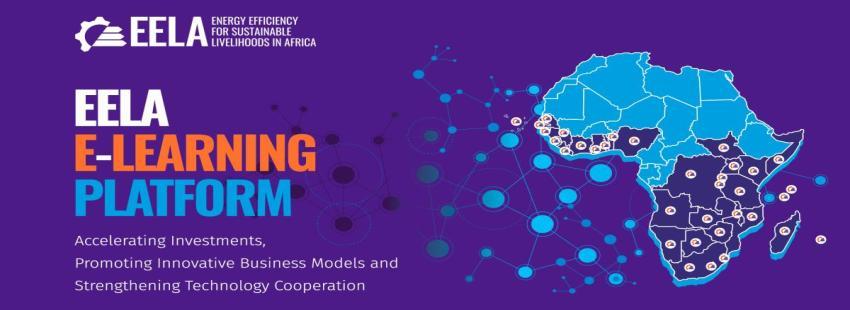
EELA E-Learning Platform
EACREEE newsletter
Updates from our latest news!